
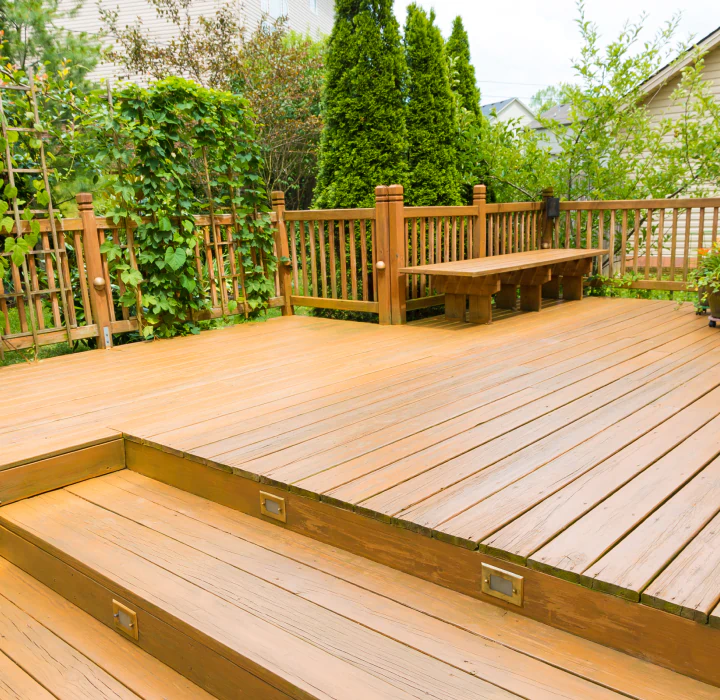
1. Plan Your Deck Construction Carefully
Every successful deck starts with a solid plan. Begin by considering the size, shape, and location of your deck, keeping in mind how you intend to use it. A detailed deck construction plan helps ensure proper spacing, access points, and alignment with your home. Use graph paper or software tools to sketch out the layout and include measurements, furniture placement, and traffic flow. Proper planning also helps you comply with local building codes and regulations.
2. Choose the Right Materials
Material selection is crucial for a long-lasting deck. Popular choices include natural wood, composite decking, and pressure-treated lumber. For traditional aesthetics, wood deck construction using cedar or redwood provides durability and natural beauty, while composite materials require less maintenance and resist warping or decay. Consider your climate, budget, and maintenance preferences when selecting decking material.
3. Ensure a Strong Foundation
The foundation supports the entire structure, making it one of the most critical aspects of deck construction. Footings should be deep enough to avoid frost heave in colder climates and properly aligned to support joists and beams. Concrete piers, deck blocks, or screw piles are common options. Ensure your foundation is level and secure, as uneven support can compromise stability and safety.
4. Proper Measurements and Layout
Accurate measurements are vital to avoid costly mistakes during construction. Measure twice and cut once, following your deck construction guide carefully. Keep joists and beams properly spaced, and ensure all angles are square. Double-check the width, height, and overall footprint of your deck before securing structural components. A precise layout reduces the risk of uneven surfaces, wobbling, or misaligned railings.
5. Structural Support and Framing
A sturdy frame ensures your deck can support weight safely. Joists, beams, and posts form the skeleton of your deck, and the spacing between them must follow code requirements. Heavier materials like stone or large furniture require additional support. Consider using galvanized hardware and braces for extra strength, particularly in areas with high wind or snow loads.
6. Safety Features and Codes
Deck safety is non-negotiable. Install secure railings at proper heights, add non-slip surfaces, and ensure steps meet building codes. Handrails, guardrails, and balusters should be installed according to regulations to prevent accidents. Check with your local building authority for any permits or inspections required. Following these guidelines protects your family and guests while increasing the longevity of your deck.
7. Deck Maintenance Considerations
Even the best-built deck needs proper maintenance. Wood decks should be sealed, stained, or painted regularly to prevent moisture damage, while composite decks benefit from periodic cleaning. Inspect structural components for rot, cracks, or loose fasteners annually. Early maintenance prevents minor issues from becoming major repairs and keeps your deck looking beautiful year after year.
8. Consider DIY vs. Professional Deck Construction
Some homeowners choose DIY deck construction for cost savings and personal satisfaction. While building your own deck can be rewarding, it requires careful planning, the right tools, and adherence to safety and code requirements. Professional contractors bring experience, expertise, and efficiency, which may be worth the investment for larger or complex projects. Evaluate your skills, budget, and timeline before deciding.
9. Plan for Functionality and Aesthetics
A well-designed deck balances function and style. Think about how you will use the space, entertaining guests, dining, or relaxing, and incorporate features like seating, planters, or lighting. Harmonize your deck’s materials and design with your home’s exterior for a cohesive look. Thoughtful design enhances usability while increasing your property’s value.
10. Avoid Common Deck Construction Mistakes
Many deck issues arise from poor planning or cutting corners. Common mistakes include uneven footing, inadequate joist spacing, improperly installed railings, and insufficient drainage. Following a reliable deck construction guide and paying attention to details helps you avoid these errors and ensures your deck remains safe and functional for years to come.
Conclusion
Successful deck construction combines careful planning, the right materials, structural integrity, and ongoing maintenance. Whether you’re embarking on new deck construction or renovating an existing deck, understanding these key factors will help you build a solid, long-lasting outdoor space. With attention to detail, safety, and functionality, your deck can become a beautiful extension of your home for family enjoyment and entertaining guests.